
Why this matters in Dublin CA
If your vehicle has lane keep assist, automatic emergency braking, adaptive cruise control, or traffic sign recognition, it likely has ADAS (Advanced Driver Assistance Systems). After a windshield replacement, those systems may need to be recalibrated to keep them operating correctly—especially when a camera sits behind the windshield.
Here in Dublin CA, we see this every week: newer cars (Toyota, Honda, Subaru, Ford, Tesla, BMW, Mercedes, and more) often require calibration after glass work because the windshield is part of the ADAS “view.” If calibration is skipped when it’s required, the car can throw warning lights—or worse, the system can behave unpredictably.
If you’re searching for ADAS calibration Dublin CA, this guide explains when you need it, why it’s required, and what to expect.
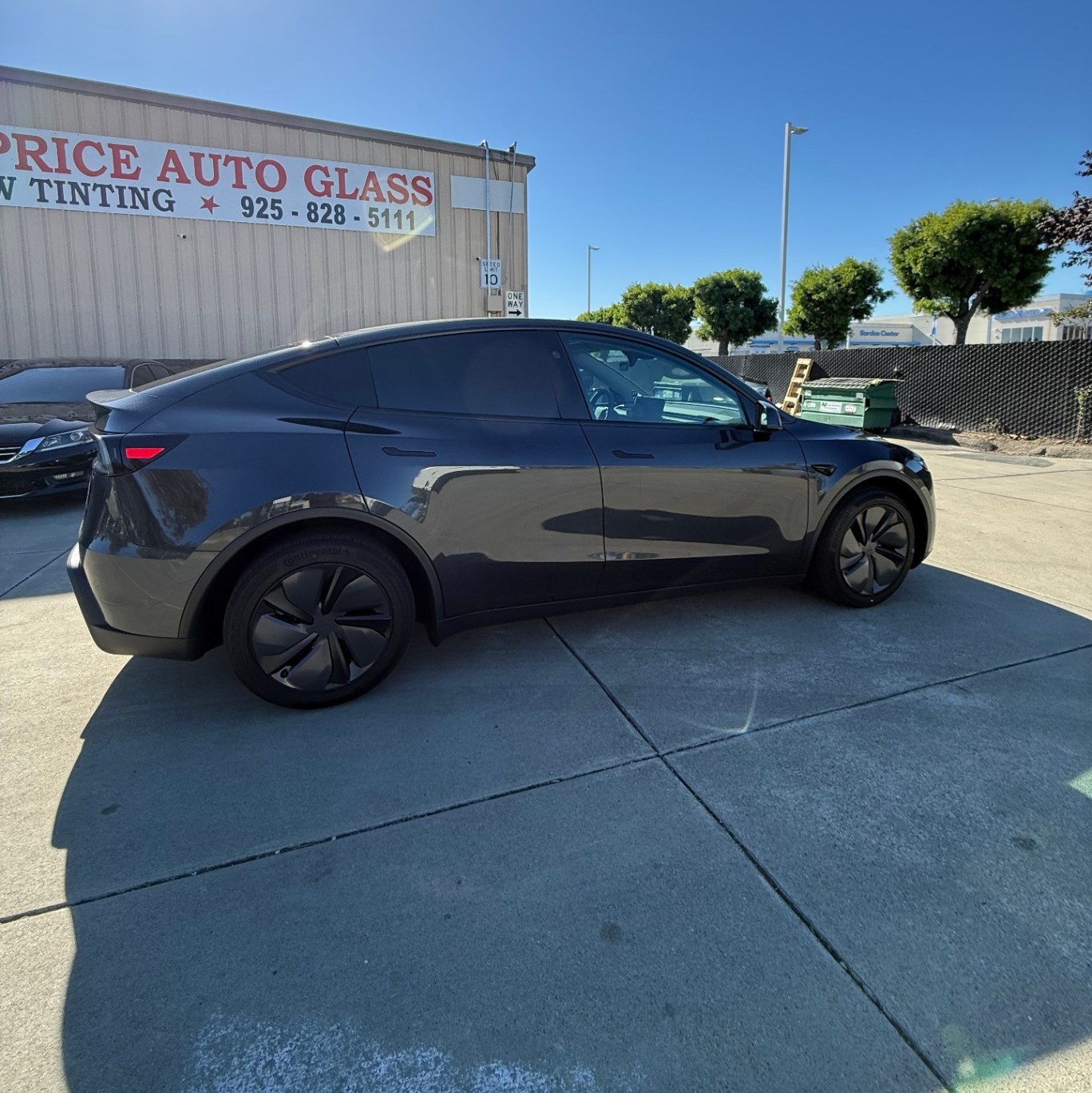
ADAS-equipped vehicles often need calibration after windshield replacement in Dublin CA to keep safety cameras aligned and working correctly.
What is ADAS calibration?
ADAS calibration is a process that re-aligns and verifies your vehicle’s safety sensors—most commonly the forward-facing camera mounted behind the windshield. Some vehicles also use radar sensors (often behind the front grille) and other modules that may be impacted by repairs, alignment, or collision work.
Calibration ensures the camera/radar knows exactly where “straight ahead” is, and that it can correctly interpret lanes, distance, pedestrians, and vehicles. In simple terms: it’s how your car “re-learns” the road after the windshield has been replaced.
In Dublin CA, where driving includes I-580/I-680 commuting, sun glare, and fast lane changes, you want ADAS functioning at 100%—not “close enough.”
Do you always need ADAS calibration after windshield replacement?
Not always—but many vehicles do.
You may need ADAS calibration after windshield replacement in Dublin CA if:
-
Your windshield has a camera bracket (usually behind the rear-view mirror area)
-
Your car has lane departure warning, lane keep assist, or automatic braking
-
Your vehicle has a rain/light sensor or HUD (heads-up display) integrated near the camera area
-
The OEM procedure requires it (this is very common on late-model vehicles)
You may not need calibration if:
-
Your vehicle has no ADAS features
-
Your vehicle uses no windshield-mounted camera (less common in newer models)
-
The manufacturer procedure does not require calibration (we still verify)
Bottom line: the correct answer isn’t “always” or “never.” The correct answer is: follow the OEM procedure and verify the system.
Why calibration may be required after windshield replacement
Even a high-quality windshield replacement can change tiny variables that matter to sensors:
-
Camera position can shift slightly based on glass thickness/tolerances
-
Bracket alignment must be exact (a small offset can impact lane recognition)
-
Optical clarity must be correct (cheap or incorrect glass can distort the camera view)
-
Reinstalling the camera incorrectly can trigger faults or misreadings
That’s why reputable shops in Dublin CA treat calibration as part of a complete, professional job—not an optional add-on when it’s required.
Static vs Dynamic ADAS calibration (what’s the difference?)
Different vehicles require different calibration types:
1) Static calibration
This is performed in a controlled environment using targets, measurements, and proper spacing. The vehicle is positioned precisely, and the system is calibrated while stationary.
Common reasons for static calibration:
-
OEM requires it
-
The camera needs target-based alignment
-
Some European vehicles and many newer systems prefer/require static
2) Dynamic calibration
This requires driving the vehicle under specific conditions so the system can self-learn (lane markings, speed range, clear weather, etc.). The process may take time and must be done correctly to complete.
Important: Some vehicles require both static + dynamic calibration depending on the system and OEM guidelines.
How do you know if your car needs ADAS calibration?
Here are practical signs we look for in Dublin CA when customers call:
-
A camera is visible behind the windshield near the mirror
-
Your dash shows messages like:
-
“Front Camera Unavailable”
-
“Lane Assist Unavailable”
-
“Collision System Malfunction”
-
-
Your estimate or insurance paperwork mentions “calibration”
-
Your car is newer (many 2016+ vehicles commonly require it)
At Low Price Auto Glass, we verify ADAS requirements by vehicle year/make/model and equipment, and we’ll be transparent about whether calibration is required and why.
What happens if calibration is skipped when it’s required?
Skipping required calibration can lead to:
-
Warning lights and system errors
-
Lane keep assist drifting or correcting at the wrong time
-
Incorrect following distance behavior (adaptive cruise)
-
Emergency braking engaging too late—or too early
-
Liability risk after an accident (especially if an ADAS function is involved)
In Dublin CA, where most driving is high-speed freeway commuting, you want full confidence your safety features are operating correctly.
Is ADAS calibration covered by insurance?
Often, yes—especially if the windshield replacement claim is approved and calibration is required by OEM procedure. Coverage depends on your policy, carrier, and claim type.
If you’re handling a claim in Dublin CA, we can help you understand what’s typically included and what documentation is needed (without wasting time going back and forth).
What to expect: timeline and professionalism
A professional windshield replacement + ADAS workflow typically includes:
-
Confirm vehicle options and ADAS requirements
-
Replace windshield using proper adhesives and cure times
-
Perform calibration (static and/or dynamic if required)
-
Verify no faults and confirm system status
This is higher-skill work, which is exactly why searching ADAS calibration Dublin CA is smart—you’re not just buying glass, you’re buying correct installation + verified safety performance.
Dublin CA takeaway
If your vehicle has modern driver-assist features, it’s very common to need ADAS calibration in Dublin CA after windshield replacement. The safest approach is to:
-
Verify OEM requirements
-
Use a shop that can handle calibration correctly
-
Avoid “cheap glass only” installs that ignore system verification
If you want it done right the first time, schedule a windshield replacement consultation and we’ll confirm whether calibration is required for your exact vehicle.
Cracked windshield on a silver SUV in Dublin CA before windshield replacement
Cracked windshield on a gray SUV in Dublin, CA for windshield replacement near me Dublin CA.